
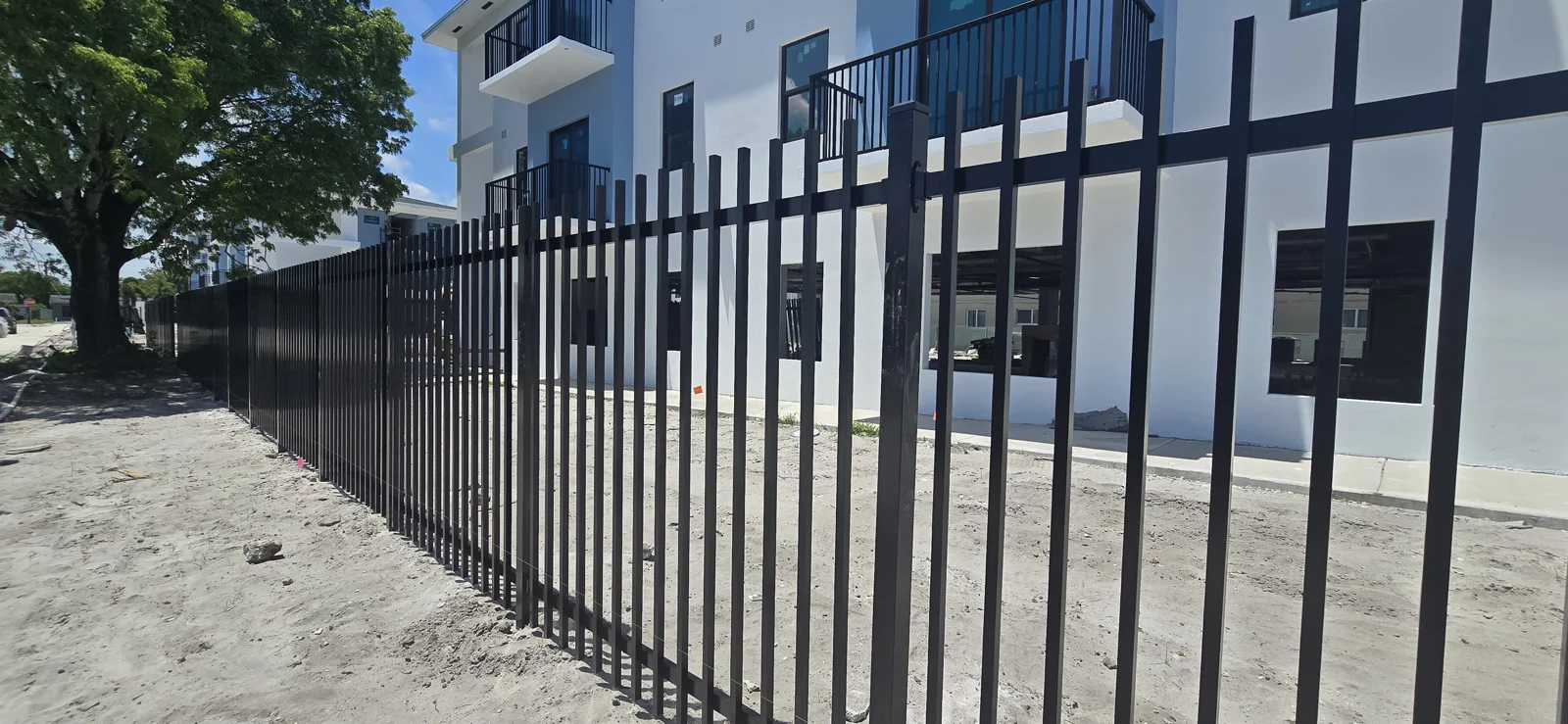
1. Define the job of the perimeter.
List the priorities: boundary definition, privacy, controlled access, appearance or separation of uses. Different parts of a property may need different solutions.
A fence can be part of a wider property-security plan, but no fence design should be presented as a guarantee against intrusion or crime.
2. Map how people and vehicles move.
Identify deliveries, customer and tenant access, maintenance, pedestrian routes and emergency access. Gate placement and clear openings need to fit these movements.
Discuss how the property will operate during installation. Temporary access arrangements and phasing belong in the project scope rather than being discovered on the day.
3. Compare the complete systems.
Review material, finish, post and foundation requirements, gates and hardware together. Explore chain link, aluminum and other material options against the property’s actual needs.
For automatic access, identify operator equipment, power, access controls, safety provisions, testing and ongoing maintenance. The gate planning page separates these responsibilities.
4. Consider ongoing ownership.
Compare the proposed care requirements, repair access, replacement component availability and any recurring equipment or connectivity charges. A lower initial figure is not a complete ownership-cost comparison.
Ask who handles service, what the written warranties cover and which items are excluded. Do not assume manufacturer material coverage and installation workmanship coverage are the same.
5. Make the proposal operationally clear.
Document the measured scope, selected system, removal, access arrangements, approvals, installation dependencies and handover requirements. Verify credentials relevant to the location and work.
Review approval coordination, credentials and warranty and commercial installation services. Then share the property’s priorities and constraints with the team.