Start with the screening you want.
Decide which views to keep open and which areas need privacy. Review the layout from the street and from the yard, including corners, changes in grade and entrances.
Horizontal describes an orientation. It does not establish a material, wind rating, security level or pool-barrier suitability. Use the privacy planning guide to clarify the purpose before choosing the assembly.
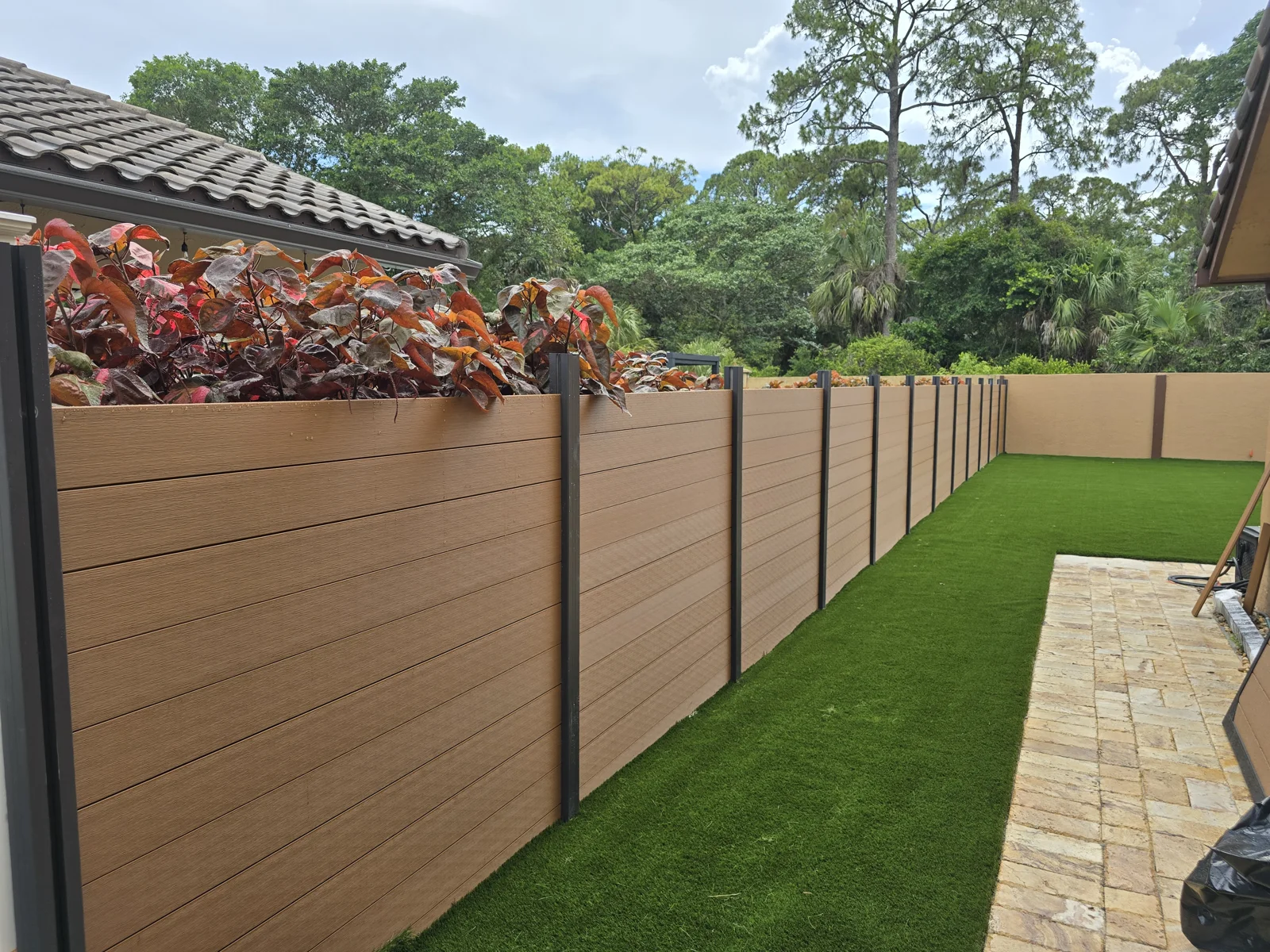
Distinguish the facing materials.
Timber boards, wood-look WPC and aluminum slats have different specifications, finishes and care requirements. Identify the exact proposed product rather than comparing vague labels such as “wood-look” or “modern.”
Do not treat composite and DuraFence as interchangeable material names. Confirm the manufacturer and system documentation for the actual product under discussion.
Ask what supports the facing.
The visible boards or slats are only part of the scope. Review the support posts or frame, connections, finish, proposed installation and how the fence meets adjoining structures.
A metal frame does not establish the durability or performance of every other component. Compare the complete documented system and its suitability for the property.
Review spacing and gate details together.
Use drawings or samples to discuss board spacing, proportions, post visibility and the appearance of the gate. Consider what is visible through the fence from different angles and how the gate looks when closed.
The gate’s frame, support, hardware and operation need their own assessment. Appearance does not establish safe clearances or compliance for a pool enclosure or powered entrance. Read the gate planning information.
Check approvals and product evidence.
Review site-specific requirements and applicable association standards before ordering. A contemporary appearance does not guarantee association approval, and a material name is not evidence of a wind rating.
Ask for the relevant specifications and written product terms. For wind-related questions, use the wind-load planning guide; for timber choices, see the wood design brief.
Compare the complete quote.
Include the facing, supports, finish, gates, removal, site conditions and agreed documentation in the written scope. Discuss cleaning, coating and replacement components for the actual selected system.
Generic per-foot prices and lifespan ranges can hide differences in that scope. Gate-only and repair work is reviewed separately. Browse the catalog and bring your preferences to the team.